A következő címkéjű bejegyzések mutatása: Romania. Összes bejegyzés megjelenítése

2022. szeptember 3., szombat

Genetic history of Romanians and other impossibilities


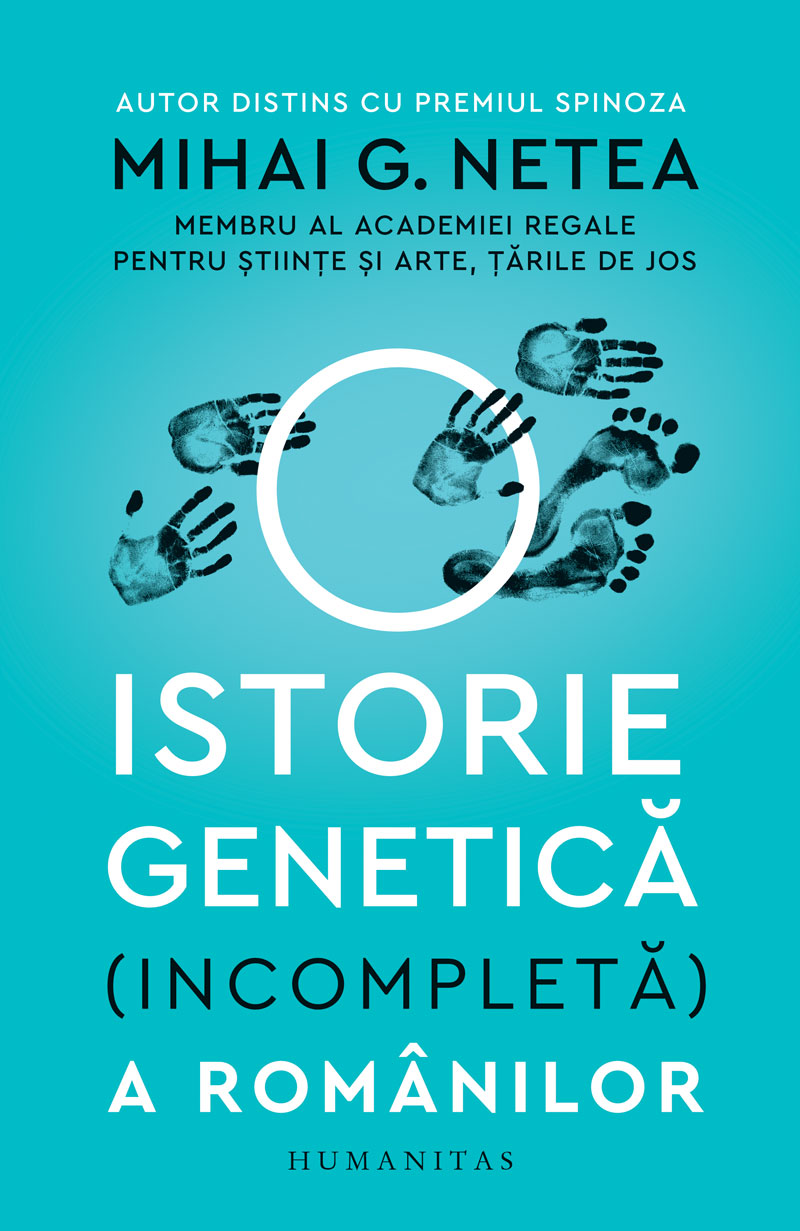
The field of science known as historical genetics now has a history of several decades. In fact, it is well known that the eugenicist movements started to link genetics with the science of history at the end of the 19th century, which a few decades later - in a much darker age, precisely as an early effect of eugenics - gave birth to the most terrible tragedies of the last century between 1933 and 1945. Historical genetics as we know it today - forgetting the traces of this dark past or sweeping it under the carpet - has achieved countless significant results since the 1980s, sometimes confirming the hypotheses of history and archeology based on written and unwritten sources, sometimes refuting them and taking them in a new direction directing the research. Historical genetics shakes spirits with new results almost every day and more than once calls historical science to self-examination: Ötzi, the iceman, although he died in Tyrol, may have been of Sardinian origin, the Etruscans and the Latins came to Italy from the steppes of today's Ukraine in the Bronze Age, the Hungarians already Even at the beginning of the Árpád era, it was considered a rather heterogeneous population, the ancestors of the Indo-Europeans can be found in Anatolia as early as the Neolithic , and the ten million euro ERC Syngergy Grant, which examines the historical genetic and archaeological connections of Central and Eastern Europe in the age of migrations (c. 400-900). With this in mind, it is perhaps understandable why the Romanian doctor and infectologist Mihai G. Netea's volume, entitled The (incomplete) genetic history of the Romanians (O istorie genetică incompletă a românilor, Editura Humanitas, Bucureşti, 2022 ), has become one of the most popular science popularization books of recent years. The volume sold thousands of copies and was very difficult to find in bookstores a few weeks after its publication. The volume's popularity may have been contributed by the fact that Mihai G. Netea gave several lectures on the topic in the last few years, which quickly spread in various social media networks. Although he has a medical degree, Netea has written a volume on the subject of history. He wanted to delve into the decades-old discipline of historical genetics, for the first time in Romania, in the form of an educational book, but this, as we shall see, is to be interpreted as a colossal failure. Going through the literature of Mihai G. Netea's volume, it is obvious that the vast majority are historical sources and not contemporary historical genetic studies. These mostly dominate in two chapters: the chapter describing the prehistoric age and the chapter dealing with the Hungarians. In the introduction to his volume, Netea tries to show the reader, with almost childlike naivety, that the contemporary concepts of "people", "nation", "national" are extremely complicated and consist of many components, using the example of stuffed cabbage. One of these is gastronomy, which also excellently shows in the case of the Romanians how many different influences have affected and shaped their gastronomy over the centuries - see the complicated Balkan-Turkish and Central European history of stuffed cabbage. However, in Netea's introductory chapter, it becomes clear that he does not have basic knowledge not only of history, but also of political science and sociology. The definition of the basic concepts – genetic population, people and national identity – would be essential in the case of such work. 

As archaeologist Bálint Csanád correctly stated: "to avoid dilettantish conclusions, let's state: geneticists' concept of population is not the same as historians' concept of people". A huge flaw in Netea's introductory chapter is the complete disregard for these concepts. In the absence of conceptual definitions and the complete disregard of the political historical phenomenon of the nation as a modern construct ("imagined communities", as defined by Benedict Anderson), Netea's volume practically does not even meet the most basic professional requirements. The following chapters of Netea try to present the different population genetic changes of the European Paleolithic, Mesolithic, Neolithic, Bronze, Copper, Iron Age, Roman Age, Age of Migrations, Middle Ages and Modern Age, following the chronological order of the history of Homo sapiens. There would be no problem with the structure if the author did not use such impossibility as "the Romanians 50,000 years ago". Netea's starting point is fundamentally correct: the genetic map of each individual carries a history of hundreds of thousands of years. Our cells contain the history of the "racial mixing" of Homo sapiens and Neanderthals (they really went through racial mixing at the beginning of prehistoric times), the genetic mutation of blue eyes and many diseases, the change in our skin color, the development of our diseases and disease tendencies. These are individual stories, which, however, are greatly influenced by the collective, Netea expands in the chapter dealing with prehistory - perhaps because a lot of general genetic studies on European populations and haplogroups were published for this age - and provides a lot of interesting medical details. This is his area of expertise: the effect of hundreds of thousands and millions of years of viruses and bacteria on human genetics. He's up to it, and you can feel it in the first few chapters. But when the volume reaches the end of the prehistoric age and the beginning of the historical age - from which a large number of archaeological and written sources are already known - the quality of the volume noticeably deteriorates. Since the genetic material of the groups living in today's Romania and the Carpathian Basin has only been researched in a few cases, Netea relies too much on historical sources when she always talks about prehistoric and ancient Romanians. His chapter on Dacians is the weakest. Being a culture that practiced cremation burials, the Dacians - which is a metahistorical concept in itself, commonly assumed several rival tribes already in antiquity, which were united by an elite for a shorter or longer period of time, although regionalities are also well documented (Gredistye–Székelyföld–Szilágy county) - historical genetic research would only be possible from a few special, exceptional burials. A Dacian burial with such a skeleton was found, for example, from the castle of Vajdahunyad, but the genetic analysis of the bones is still pending. Netea speaks of the Dacians as a single "people" (contradicting both the literary and archaeological sources) and the ancestors of the Romanians, despite the fact that only 4 of the 32 footnotes in this chapter cite historical genetic studies, and of those, only one study from 2019 is related to the Thracians. On page 105 of Netea's volume, he states that no genetic material is currently available for the Dacians. However, this does not prevent him from talking about Dacian-Roman synthesis in the next chapter. Netea is not doing anything else here, he is merely following the official historiographical line of the Romanian Academy - also from that the most conservative trend , which promotes Dacian-Roman continuity even after 1990. The chapter on the Roman period also mainly deals with the population genetics of the population of ancient Italy and the Etruscans (footnotes nr. 1-5, page 232.) during the Roman period, since there are no relevant Transylvanian-Dacian sources for this period either. The only study focusing on local genetic samples (Cocos et al. 2017) used contemporary genetic material and not samples from ancient Dacian or Roman (from Dacia) DNA.
Historical genetic studies on the population of Dacia province are sorely lacking, even though thousands of Roman graves have been excavated in the last century and a half. In the absence of these, it is difficult to talk about what proportion of the Romanian population today is "Roman". Perhaps it would have been worth quoting Balkan research from the Roman era, which precisely proves the high degree of genetic mixing and the subsequent Slavification. In a separate chapter, he deals with the period of migration, then with the Bulgarians, Hungarians and Kunks. Here, too, he basically relies on historical sources, since relevant genetic material and research was only done on the Hungarians, which he cites in detail, although he does not go into, for example, the genetic characteristics of the early medieval Transylvanian Hungarian and later Hungarian-Romanian population. Netea states that the conquering Bulgarians, Hungarians and Kuns merged very early with the contemporary population of the region (Avars, Slavs, post-Roman, Neo-Latin groups), the genetic effects on the Romanians were minimal at this age. This is certainly true, but we still do not know - and this is not clear from his book - who the Romanians are. Of course, the question is really meaningless from a genetic point of view, since "genetic Romanians" hardly exist. The title of the volume is also completely wrong, and it does not deliver what it promises: in order to map the genetic history of a population (in this case, the Romanian-speaking inhabitants of contemporary Romania, who identify themselves as Romanian), a sufficient amount of data would be needed. Did the author have this available? Unfortunately not. So writing about genetic history is fiction in this case as well. It is an even bigger problem that what Netea does in this volume is not a historical population genetics analysis, but rather a confused mixing of archaeological, historical, historiographical, ethnographic and linguistic traditions and sources with some contemporary results of historical genetics. The, Finally, Netea depicts the genetic history of Romanians in a pyramid (on page 215), which reveals (sic!) that Romanians genetically mostly (98 percent) have the genetics of Homo sapiens, 2 percent of which includes the genetics of Neanderthals and Denisovans (as most likely to all Europeans). They also have genetics from Stone Age agricultural groups (50 percent), prehistoric gatherers (30 percent), and Indo-European herders (or 20 percent). It is not clear where the author gets these data and ratios from, nor exactly with which haplogroup these tiny differences can be detected in the large genetic material of, for example, the Romanian population and other contemporary populations. In the third layer, it doesn't even give proportions anymore, it just marks the dice with upper and lower case letters, Romans (whatever this legal term means anyway), Slavs, Hungarians, Kuns and Roma. He barely mentions Greeks, Jews, Turks, Armenians, Tatars, Aromanians, Macedonians, modern-day Serbs, Bulgarians, Hungarian-Romanian, Székely-Romanian admixture (for example, the Csangós) and considers them marginal. Unfortunately, Mihai G. Netea's volume does not correspond to the methodology of the genetics of the story, nor to the vocabulary of archeology and historical sciences. It projects a modern image of the nation onto a population genetics for which there is basically no data from most historical periods. To my heart, I interpret Netea's volume as an example of the new metahistory resulting from the symbiosis of natural sciences and history, which I am afraid will open a new trend on the contemporary book market. However, all this apparently does not affect the popularity of the book, which continues to lead the sales lists of the Humanitas publishing house.

2015. január 30., péntek

A Hungarian from Romania: what is that?

This is a frequent question, what I get in a foreign country. Sometimes only from students, but it happens that even intellectuals surprise me with their confusion. This means of course, that most of the people have no idea about European history and instead of reading a little bit about the social and historical reality of the Old Continent, we are just blaming Americans, that they don't know geography and history. But do we know each other at least?

So: Hungarian from Romania. What is that? I could answer this question with one short word: it is a Transylvanian! But this is again, not true. First of all, because Transylvania is a problematic notion, having different geographical definitions  during its long, more than 1000 years old history (history of this notion, as political and historical reality / the area of course, has a much longer history). Secondly, because not all of the people from the "modern" Transylvania (everything which is inside the Carpathian basin on the territory of Romania) are Hungarians! There are 80% Romanians and numerous other ethnic and cultural groups, with their own special identity (Gypsies, Germans - Saxons and Schwabish-, Armenians, Jewish, Turkish, Serbians, Croatians, Slovakians, Polish, Ukrainians, etc). And thirdly: because there are Hungarians in Romania outside of Transylvania too (not so much, however as in the 1930's when Bucuresti was named as the "second biggest Hungarian city"). So...the situation seems more difficult, than it seems.
But, lets try at least.

Hungarians in Romania in 2002
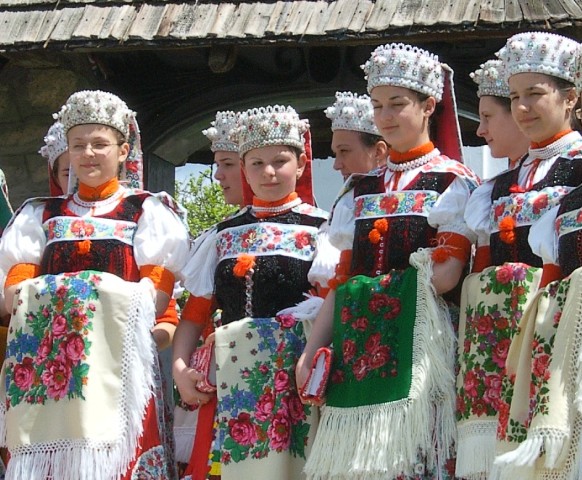
A Hungarian from Romania, is a Romanian/Hungarian citizen (we can have now dual citizenship) who speaks Hungarian, as a mother language (it means: at home, with his friends, in the elementary, high school and even faculty), Romanian as a second, state language (in most of the cases, however older generations have problems speaking the language of the state) and identify himself par excellence, as a Hungarian. Yes, you get it: the key concept is: identity. Identity is, very simple: who you are, how you identify yourself as a cultural, human being? For this question, we answer very simply: Hungarian from Romania (or Transylvanian  - if we came from this area of the country). For us, citizenship and nationality, two legal words from the Anglo-Saxon and French legislative literature and cultural tradition, are totally different notions: citizenship is a legal, constitutional term and status, while nationality is more a cultural concept, close to identity. In this sense, we are Romanian citizens and Hungarians, as nationality.

It is not that strange and unique  - or problematic - as many Romanians or some foreigners think. Europe - due to its long and problematic history - is full with ethnic and cultural minorities and a great amalgam of identities. In many cases, they have their autonomous territory or special laws protecting their cultural heritage and identity. Hungarians in Romania - however a part of them, the Szeklers (Székelyek) are living in a compact area - doesn't have yet a territorial autonomy. 
A person, can have of course numerous identities. There are lot of shades of grey, as we know. 

What the Hungarians do in Romania? Another frequent question from foreigners. Well, read history
please. But, saving your time: Hungarians arrive in the Carpathian Basin in the 9th century A.D. and till 1920, they represent the political and administrative power in this area. That means, more than 1000 years of presence and cultural heritage. However, in numbers, they are minorities already in the 17th century in Transylvania (the majority being the Romanian population). There is a big difference of minorities, as diaspora and recent immigrants in Europe and a historical minority. Another notion, which is useful to learn. 
However, the differences between a Romanian and Hungarian from Romania are sometimes emphasized by politics and corrupt mass media, the reality is, that Romanians born in Transylvania are good friends of Hungarians. We share a thousand years long common history, similar melodies and vestments in traditional folklore, similar fairly tales, lot of words changed and exchanged in our language and numerous mixed families exist. 

I wish, that not only Romanian politicians, but the average tourist who visit Transylvania, this amazing part of Europe will understand, how the hell is possible, that you are in Romania, and you can hear sometimes the same language, as in Budapest.


2014. október 7., kedd

The gold and silver of Romania - notes about an exhibition

Finally, something happened in my hometown too. Rarely, when I visit the city I have the problem to find cultural events or interesting exhibitions to visit. 
Fortunately now you can enjoy in Satu Mare one of the most popular itinerary exhibitions of Romania, which visited already numerous Romanian, but also foreign cities (in Rome, for example). The exhibition is entitled: "The gold and silver of Romania" and it is presented in the Vécsey Ház (House of Vécsey) the municipal museum of the city. 
The elegant, classicist building from the 18th century fits perfectly to the most exquisite artifact ever found on the territory of Romania. The exhibition presents the most important treasures - mainly gold and silver - found on the territory of Romania from the Eneolithic till the end of the 7th century A.D. More than four thousands year of history, where you can find some of the most important hoards and treasures of Celts, Getic, Dacian and Roman cultures and communities from this territory. Among the most important treasures, you can see here some pieces (few of the treasures are presented completely here) from Agighiol treasure, Pietrosa, Apahida II. 
The positive parts of the exhibition:
- nice, European standard presentation, lights and descriptions
- detailed historical background presentation, good maps, sometimes interactive reconstructions
- nicely arranged space and not so crowded glasses 
- amazing artifacts (obviously)

The negative parts of the exhibition:
- presentation only in Romanian language (no English, no Hungarian)
- few 3D or interactive reconstructions
- few information about the functionality of the objects, wider historical and daily life of the people who made it (too much "history" and data for laic people) 


2014. szeptember 12., péntek

În căutarea trecutului: detectorul şi arheologia

Interview with Pop Iuliu Cristinel, one of the most succesful metal - detectorist or more, a passionate archaeologist from Romania. His legal activity and rare passion for history and archaeology could open a new way and an auxiliary research for archaeology and history.

De unde provine interesul şi entusiasmul faţă de istorie şi trecut ?
- Pasiunea pentru istorie în general o am demult şi chiar dacă nu am această specializare , am fost de când mă ştiu un consumator de literatură de specialitate pentru publicul larg şi nu numai , jurnale de călătorie , vechi consemnări , documente etc.Ori de câte ori aveam ocazia , căutam cu plăcere orice obiectiv istoric ce avea legătură cu vechimea locurilor vizitate.
  Când aţi început să folosiţi detectorul de metale şi de ce aţi ales această metodă de cercetare ?
- De circa 14 ani am avut în timp câteva proiecte nefinalizate de a-mi construi parte din
Pop Iuliu Cristinel
aparatura necesară ieşirii în teren , dar pot spune că folosesc la modul serios detectorul de metale de aproximativ 5-6 ani. Ca metodă de cercetare , a folosi un echipament de detecţie a metalelor în regim de amator, consider că poate fi o confirmare a unui areal ca având potenţial arheologic , indicii certe ale unor simple presupuneri , sau nici măcar atât prin metodele clasice de periegheză.Contextul fiecărui obiect metalic dar nu numai , poate fi foarte important in cercetarea arheologică ce urmează. Dar trebuie să ţinem cont şi de faptul că în timp , foarte multe obiecte de valoare patrimonială au fost pierdute sau chiar ascunse prin natura împrejurărilor , în locuri unde nu poate fi reconstituit niciun context istoric.Atât în primul , cât şi-n al doilea caz , vorbim de artefacte ce pot fi integrate in circuitul muzeal după o restaurare şi supuse cercetărilor de specialitate.
Motivaţia fiecărui deţinător de detector de metale poate fi diferită şi aici vorbesc doar de cei care sunt deţinători cu acte în regulă , luaţi în evidenţele autorităţilor conform prevederilor legale.În rândul acestora , denumiţi generic de către cei de pe margine „detectorişti” , veţi întâlni pasionaţi de istorie şi de trecut , care vor să-şi pună descoperirile în slujba specialiştilor , pasionaţi ale urmelor celor 2 conflagraţii mondiale în rândul cărora întâlnim şi colecţionari , persoane oneste care vor doar o relaxare de week end cu familia la o detecţie fără pretenţii de mari reuşite şi după mine cei mai numeroşi , cei animaţi de legende locale pe care le auzi în toate zonele ţării , care vorbesc de tezaure din metale preţioase îngropate ce abia aşteaptă să fie descoperite.Bineînţeles , după un stagiu de teren , ultima categorie este cea mai dezamagită.
În ceea ce mă priveşte , eu unul nu mă consider un „detectorist” , cu atât mai puţin un „treasure hunter” , ci prin realizările şi prin obiectivele pe care le am , mai degrabă un pasionat de istorie , un „archaeological enthusiast” dacă vreţi , care foloseşte detectorul de metale ca pe un accesoriu şi nu ca pe un scop în sine.
   Ce spune regulamentul actual despre folosirea detectorului de metale ? Dacă ne comparăm legea din România cu alte ţări din Europa, cum l-am putea caracteriza ?
Există o reglementare legală a folosirii detectoarelor de metale şi-n România ca în majoritatea statelor europene şi comparativ cu legi ale altor state din U.E. , legislaţia românească de profil aş defini-o destul de permisivă dar puţin ambiguă lăsând loc de
One of the finest pieces found by Cristinel
interpretări şi totuşi destul de bine adaptată realităţilor noastre.Pe fondul devalizării siturilor arheologice din Munţii Orăştiei , în anul 2000 au apărut norme juridice modificate şi completate în timp , care reglementează pe lângă aspecte de patrimoniul mobil şi deţinerea unui detector de metale.Autorizarea deţinerii unui detector de metale , este in sarcina Biroului de combatere a infracţiunilor contra patrimoniului din Serviciul de Investigaţii Criminale , din cadrul fiecărui Inspectorat Judeţeana de Poliţie.Ca în orice stat civilizat , accesul într-un sit arheologic cu un detector de metale chiar cu autorizaţie de deţinere , este prohibit fiind infracţiune.O detecţie într-un sit arheologic e posibilă doar cu autorizaţie emisă punctual de către personalul specializat al Ministerului Culturii.De asemenea este reglementat strict termenul de predare de 72 de ore al obiectelor de patrimoniu către instituţiile abilitate , precum şi recompensa ce o poate obţine pentru ceea ce se predă.În urma expertizării şi evaluării obiectului de patrimoniu descoperit si predat în condiţiile legii , descoperitorul poate primi o recompensă de 30 % din valoarea evaluată , la care se mai poate adăuga un procent suplimentar de până la 15 %  pentru obiectele de patrimoniu de valoare excepţională.
 Cum lucraţi pe teren ? Cum alegeţi zona sau obiectul de cercetare ?
De regulă înaintea fiecărei ieşiri într-un loc inedit , are loc o documentare destul de temeinică , pe care o fac uneori împreună cu un bun amic de ieşiri.Studiem contextul general în vechi hărţi şi în imaginile din satelit , toponimia locală , relieful zonei , interesul pentru zonă în perioade istorice diferite , resurse naturale , cursuri de apă , urme de locuire , cioburi ceramice etc. , pe scurt o periegheză care se apropie ca şi pretenţii de cea făcută de către specialişti.
  Recent, aproape săptămânal apare un tezaur monetar dacic sau elenistic, iar majoritatea descoperirilor importante provin de la detectorişti de metale. De când a devenit acest fenomen atăt de popular şi cum vedeţi viitorul acestui gen de cercetare ?
- Acum aproape 5 ani , împreună cu 2 amici , am creat o platformă online dedicată
pasionaţilor de metal detecting , prima de acest fel din România , pe care în câţiva ani am reuşit s-o dezvoltăm , cuvântul de ordine fiind legalitatea în domeniul patrimoniului mobil.Cei care ni s-au alăturat , ne-au urmat în demersul nostru , astfel că în urma unei prime descoperiri mai importante la nivelul anului 2010 , au urmat cu timpul şi altele descoperiri spectaculoase din partea altor colegi pasionaţi care au urmat filiera legală a predării , descoperiri care s-au înmulţit în ultima vreme. Ulterior parte din membrii fondatori ai acestui forum ne-am mai scindat , nuanţându-ne direcţia de activitate în alte 2 platforme online.Marile descoperiri ale acestor ultimi 4 ani , de care s-a auzit şi prin intermediul mass media , au fost făcute de persoane de caracter pe care le cunosc.Sunt colegi pasionaţi de istorie ce nu au urmărit aspectul material al unei descoperiri şi a căror conduită legală ne arată că se poate şi aşa.
    Ce perspective aveţi în privinţa cercetărilor viitoare ?
        Împreună cu alţi colegi apropiaţi , voi încuraja în continuare parteneriatele de colaborare pe bază de voluntariat ale pasionaţilor cu echipele de arheologi , sugerând o activitate în teren transparentă , desfăşurată în condiţiile legii.De asemenea sper într-o formulă comună de abordare a relaţiei pasionat / specialist , care să angreneze ambele părţi în proiecte comune. 
  În ceea ce mă priveşte , probabil voi continua să mă implic în zone ale judeţului Mureş , considerând că prin rezultatele obţinute am dobândit o bună relaţie de colaborare cu echipa de arheologi a Muzelui Judeţean Mureş.
 

2014. augusztus 23., szombat

Ioan Piso 70.

Our generation of the M.A. studies was famous for many reasons: first of all, we had a strange nickname, known later by many of the professors (F.B.R.S.), we published two collective volumes with our first published articles and...we were among the last lucky and honored generations, learned by one of the great minds and intellectuals of Cluj and Central Europe: Ioan Piso. Known as one of the best epigraphists in Europe today, his monumental work (more than 200 articles and books published mainly in foreign languages) was for us a great model. His majestic personality, calm  voice and not at least, his incredible knowledge and cultural impact (great fan of arts and almost every branch of the European culture) was for many of us a model. Our common visit in Apulum in 2010 remained in our memory as a great event in the first year of the M.A. studies.  Today he is celebrating his 70th Birthday.

Ad multos annos!
 (Photos from our visit in Apulum in 2010)
Piso and Ortolf Harl


F.B.R.S. and prof.dr. Ioan Piso
http://www.trilulilu.ro/video-divertisment/clujul-trait-ep-34-ioan-piso-17-01-10?ref=cauta