A következő címkéjű bejegyzések mutatása: history. Összes bejegyzés megjelenítése

2023. augusztus 8., kedd

Erdély globális története - egy munkajavaslat


Prológus


Ez a szöveg 2017 augusztusában jelent meg az akkor még jobb időket megélt Transindex honlapján. A szövegben leirtak nagy részével ma, 2023 nyarán is egyet értek. Hat év eltelt és a szövegben helyesen prognosztizált feszült 2018-as centenáriumi év nem hozott releváns historiográfiai munkákat Erdély történetére vonatkozóan, csak az unalmas, ultra-nacionalista, vagy a még unalmasabb részletkutatások jelentek meg, amelyek meglehet egy-egy doktorandusznak fontos lábjegyzetet fognak hozni, de a nagyközönségre, a kollektiv történeti tudat dinamikájára vagy a kollektiv történelmi traumák enyhitésére semmilyen hatással nem voltak. A globális történetirásnak lett azóta magyarországi terméke 2022-ben, a kötet nagy sikernek örvend azóta is, készül a második kötet.

Erdély is megérdemelné, hogy historiográfiai paradigmán essen át. Ez lenne a történész-kollégák feladata. Mi, az ókorral (Rómával) foglalkozók kicsit jobb helyzetben vagyunk, hisz nem tudunk úgy beszélni Dacia történetéről, hogy ne a teljes birodalmi hálózat-kutatást, mobilitás-történetet, tárgy- és emberbiográfiákat nézzük együttesen, mikro-, mezo- és makro-térbeli taxonómiában. Én magam is ezt gyakorlom tanulmányaimban. A kora-középkor régészei számára is már természetes, hogy az ún. "népvándorlások korát" (maga a fogalom is helytelen, hisz minden korszak "népvándorló" kor, néha több, néha kevesebb mobilitással) eurázsiai kontextusban értelmezzék. Külföldön egyre gyakoribb az ókori nyugat és kelet közötti szoros kapcsolat vizsgálata, elég itt a Selyemútak hatására gondolni. Ideje lenne azonban a középkori, újkori és jelenkori kutatásnak is Sebastian Conrad módszerét használni. Jó jel, hogy legalább román nyelven már elérhető Conrad felvilágosodásról irott nagy esszéje. 


Itt pedig a 2017-es cikkem.


Az Európától ismét elváló Egyesült Királyságban nemrég egy olyan animációt mutattak be, ahol az egykori római provincia, Britannia egyik lakosa fekete bőrűként szerepelt a gyerekeknek szánt filmben. Ez olyan felháborodást keltett néhány véleményvezér és szélsőjobboldali szervezet körében, hogy a világhírű ókortörténész, Mary Beard is csatlakozott a vitához, amely végül trágárkodásba és alpári vitasorozatba fulladt. Az eset kiváló példa arra, hogy még az Egyesült Királyságban sem magától értetődő a történelmi tények és források kontextuális értelmezése és a plurikulturalitás elfogadása. Mary Beard érvei azonban rámutattak arra, hogy ma már elengedhetetlen a nemzeti, nacionalista történetírások helyett a globális történetírás bevezetése. Nézzük meg közelebbről, mit is jelent ez és mennyire alkalmazható ez a történelmi megközelítés a nacionalizmustól fűtött és 2018-höz közeledve ismét súlyosbodó Erdély-kérdés traumáinak feldolgozására. 

A botrányossá lett BBC animációban Britannia, a mintegy négy évszázadon át római provinciaként ismert terület egy sajátos katona-családjáról szól, ahol a római katona fekete bőrű, felesége fehér, míg gyermekei már egy vegyes kultúrából és etnikumból származó gyerekek voltak. A gyerekeknek szánt animáció a római kori ember életét igyekezett interaktív módon bemutatni, ám az eredmény az lett, hogy Nagy Britanniában és azon túl, az amerikai Alex Jones műsorában is mint a „baloldal történelemhamisításaként” lett értelmezve. A rövid animáció sokakat felháborított, hogy egy 90%-ban fehér emberek által lakott provinciát egy fekete római katona családja szimbolizál. A kritikusok azzal vádolták a BBC-t, hogy a kortárs etnikai és „multikulturális” sokszínűséget és nagy-britanniai kavalkádot akarják múltbeli eseményekre, korszakokra ráhúzni a politikai korrektség érdekében, ezáltal „meghamisítva Nagy Britannia történetét”. Mary Beard, aki talán azon kevés ókortörténészek közé tartozik, aki nyíltan felvállalja a public intellectual, azaz közértelmiség szerepkörét és ezáltal világhírnévre tett szert, azonnal az animáció védelmére kelt és bebizonyította, hogy Britannia, az egykori római provincia etnikailag valóban sokszínű, változatos volt és Mauritániából (a mai Marokkó területéről) vagy épp Africa provinciából (a mai Tunézia Algéria területe) számos katona állomásozott a provinciában. Ezeket a katonákat, ahogy az egykori Líbiából származó római császárokat, így Septimius Severust is aligha kellene fehér emberekként elképzelnünk, hisz ez egyértelműen történelemhamisítás lenne. A szélsőjobboldali gondolkodók és véleményformálók által hevesen támadott cambridge-i professzorasszony szerint ideje lenne az átlagembereknek elfelejteni a fehér ember által dominált nacionalista történetírást, hisz Európa és annak bizonyos régióinak története soha nem kizárólagosan a fehér férfi történetéről szólt – ahogy ezt mi megszoktuk a történelemkönyvekből. Mary Beard a globális történelemszemléletet tartja a megoldásnak. A globális történelem alatt azonban nem világtörténelmet vagy nemzetközi kapcsolatok történetét érti, ahogy azt egykor a XIX. századi pozitivisták vagy enciklopédisták gondolták, de mégcsak nem is az Arnold J. Toynbee féle univerzális történelemre utal. Globális története lehet egy falunak is, egy városnak vagy egy országnak, provinciának: azokat a kulturális, etnikai, gazdasági, politikai és katonai hálózatok (networks) összességét jelenti, amely egy adott mikro vagy makrotársadalmat felépíti. A globális történetírás számos nagy munkát és érdekes kutatási eredményt hozott már az elmúlt időszakban különösen a birodalom-kutatások területén (lásd Sebastian Conrad, Mi a globális történelem? Princeton University Press, 2016, Hodos et al., Routledge Handbook of archaeology and globalisation, New York-London, 2017). Sebastian Conrad a Freie Universität világhírű professzora híres könyvében a globális történelemnek három fő aspektusát emeli ki: a mindenség és mindenek történelme, a hálózatok és konnektivitás története és az integrációs folyamatok története. Conrad könyvében rámutat arra, hogy a nagy világtörténetekben valójában nemzetek történetét látjuk felsorakoztatva, egymás mellé, azok interakciója és közös kapcsolati hálózata nélkül. Történetírásunk hagyományai másról sem szólnak, mint a fehér férfi által végzett nagy tettek nemzeti történelmeiről. Conrad szerint, az új történetírás fő szerepe a globális, azaz minden részletre kitérő szemléletről kell szóljon, ahol a történész – elemezzen egy család történetét vagy egy ország, esetleg népcsoport, ha úgy tetszik nemzet történetét – egyszerre kell figyeljen az emberek közötti viszonyra, társadalmi hálózatukra, konnektivitásaikra, az általuk használt tárgyak mozgására és mobilitására, az őket érintő politikai, kulturális, ökológiai és katonai hatásokra és ideológiai változásokra és eszmék mobilitására is. Ez a komplex, sok mindenre kitérő történelem-szemlélet adja a globális történetírás fő újdonságát, amelynek tükrében a Mary Beard féle Britannia római provincia története is egészen új perspektívákat kap és a Mauretániából a brit szigetekre került római katona története egyáltalán nem lesz szokatlan és botrányos. Ez a szemlélet megoldást hozhat – hozhatna – Erdély történetének értelmezésében is. 

A mi kis vidékünk története jelenleg a román és a magyar nemzeti történetírás közötti harc áldozata. Ritkán kerül ki ennek a két, nemegyszer radikálisan szembenálló történetírásnak a bűvköréből, főleg néhány külföldi kutató munkájában láthatunk enyhén globális szemléletet. Erdély története kulcsfontosságú eszköze a 2018-as centenáriumi ünnepségeknek, amely maga is egy történelmi eseményre való reflektálás, újraértelmezés. A történelem terhe tehát itt van a nyakunkon és csak rajtunk múlik, hogy mit kezdünk vele: Erdély történetét meg lehet írni ezerféle képpen. Mint a románok egyesülési harcának dicső történetét, a magyarok Erdélyének történetét, a szászok Erdélye, a zsidók, örmények, cigányok Erdélyének története….és igy tovább. De bármelyik korszakot, bármelyik etnikumot vagy politikai entitást is vegyünk Erdély történetéből, a globális szemlélet segíthet abban, hogy ne etnikumfüggő, miszogén történelmet irjunk, hanem a Conrad-féle globalista téziseket alkalmazzuk végre a mi kis vidékünkre is és elemezzük például románok és magyarok közös viszonyát, kulturális kölcsönhatását, külföldi – európai és azon túli – kapcsolataikat – magyarán, helyezzük el Erdélyt egy európai és miért ne, globális térképen, ahol a mi házunk tájának problémái máris egészen más perspektívákban értelmezendőek. Milyen furcsa is lenne egy olyan Erdély története című kötetet felütni, ahol az első lapokon nem a dicső dákok, mint a nemzetalkotó román nép őseinek a története elevenedne fel, hanem a változatos kelták, dákok, trákok, majd a sokszínű – így a mifelénk is állomásozó mauretániai fekete katonák – élete elevenedne meg kontinentális, vagy akár eurázsiai kontextusban. Hisz Erdély története a római korban, középkorban, újkorban és főleg a jelenkorban jóval több, mint románok és magyarok közötti traumák és nemzeti harcok férfias története. Bár tanulmányok és főleg művészettörténeti munkákban egyre többen foglalkoznak Erdély szélesebb, európai vagy akár eurázsiai kontextualizálásával, ideje lenne talán úgy az egyetemi oktatásban, mint egy új Erdély története kötetben végre túlnőni, felnőni úgy a magyar, mint a román történészeknek és a mi kis vidékünk globális történetét megírni. Ez lehetne az első lépés ahhoz, hogy felnőjünk és 100 év után végre felül emelkedjünk nemzeti pszichózisainkon és traumáinkon. 


2022. szeptember 3., szombat

Genetic history of Romanians and other impossibilities


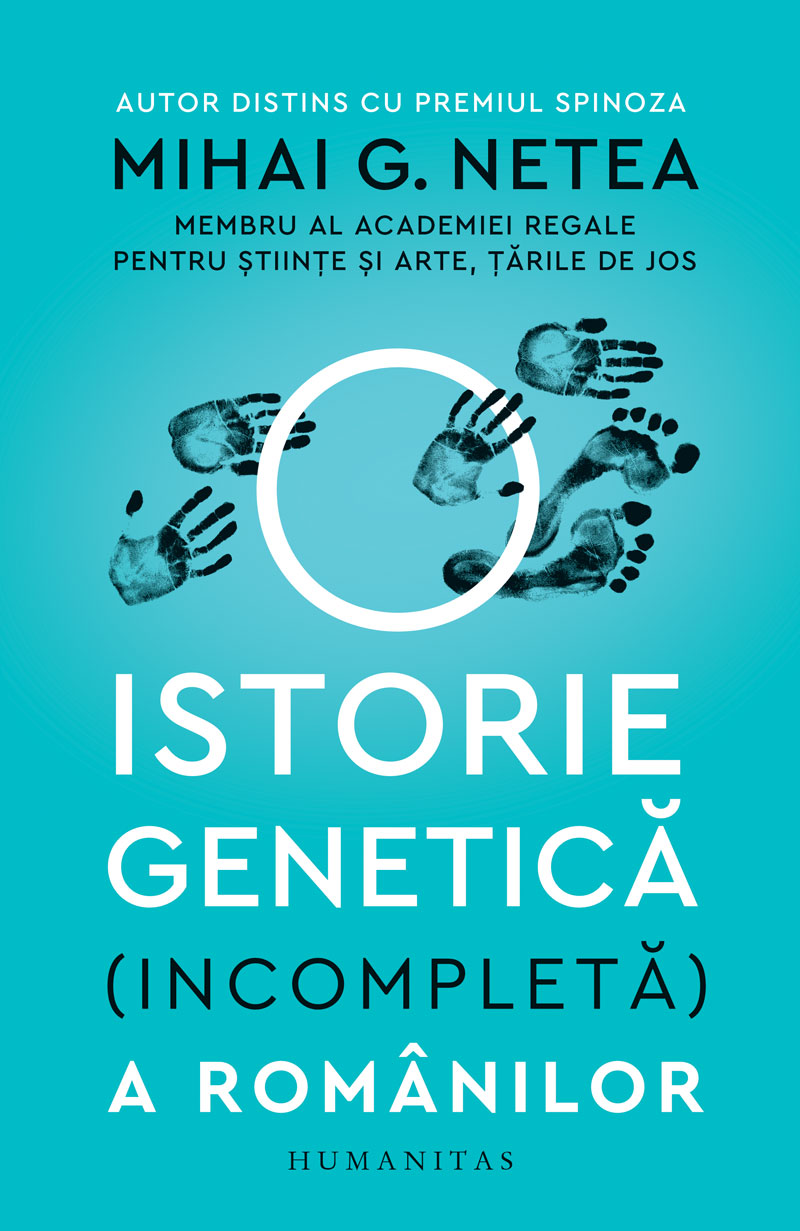
The field of science known as historical genetics now has a history of several decades. In fact, it is well known that the eugenicist movements started to link genetics with the science of history at the end of the 19th century, which a few decades later - in a much darker age, precisely as an early effect of eugenics - gave birth to the most terrible tragedies of the last century between 1933 and 1945. Historical genetics as we know it today - forgetting the traces of this dark past or sweeping it under the carpet - has achieved countless significant results since the 1980s, sometimes confirming the hypotheses of history and archeology based on written and unwritten sources, sometimes refuting them and taking them in a new direction directing the research. Historical genetics shakes spirits with new results almost every day and more than once calls historical science to self-examination: Ötzi, the iceman, although he died in Tyrol, may have been of Sardinian origin, the Etruscans and the Latins came to Italy from the steppes of today's Ukraine in the Bronze Age, the Hungarians already Even at the beginning of the Árpád era, it was considered a rather heterogeneous population, the ancestors of the Indo-Europeans can be found in Anatolia as early as the Neolithic , and the ten million euro ERC Syngergy Grant, which examines the historical genetic and archaeological connections of Central and Eastern Europe in the age of migrations (c. 400-900). With this in mind, it is perhaps understandable why the Romanian doctor and infectologist Mihai G. Netea's volume, entitled The (incomplete) genetic history of the Romanians (O istorie genetică incompletă a românilor, Editura Humanitas, Bucureşti, 2022 ), has become one of the most popular science popularization books of recent years. The volume sold thousands of copies and was very difficult to find in bookstores a few weeks after its publication. The volume's popularity may have been contributed by the fact that Mihai G. Netea gave several lectures on the topic in the last few years, which quickly spread in various social media networks. Although he has a medical degree, Netea has written a volume on the subject of history. He wanted to delve into the decades-old discipline of historical genetics, for the first time in Romania, in the form of an educational book, but this, as we shall see, is to be interpreted as a colossal failure. Going through the literature of Mihai G. Netea's volume, it is obvious that the vast majority are historical sources and not contemporary historical genetic studies. These mostly dominate in two chapters: the chapter describing the prehistoric age and the chapter dealing with the Hungarians. In the introduction to his volume, Netea tries to show the reader, with almost childlike naivety, that the contemporary concepts of "people", "nation", "national" are extremely complicated and consist of many components, using the example of stuffed cabbage. One of these is gastronomy, which also excellently shows in the case of the Romanians how many different influences have affected and shaped their gastronomy over the centuries - see the complicated Balkan-Turkish and Central European history of stuffed cabbage. However, in Netea's introductory chapter, it becomes clear that he does not have basic knowledge not only of history, but also of political science and sociology. The definition of the basic concepts – genetic population, people and national identity – would be essential in the case of such work. 

As archaeologist Bálint Csanád correctly stated: "to avoid dilettantish conclusions, let's state: geneticists' concept of population is not the same as historians' concept of people". A huge flaw in Netea's introductory chapter is the complete disregard for these concepts. In the absence of conceptual definitions and the complete disregard of the political historical phenomenon of the nation as a modern construct ("imagined communities", as defined by Benedict Anderson), Netea's volume practically does not even meet the most basic professional requirements. The following chapters of Netea try to present the different population genetic changes of the European Paleolithic, Mesolithic, Neolithic, Bronze, Copper, Iron Age, Roman Age, Age of Migrations, Middle Ages and Modern Age, following the chronological order of the history of Homo sapiens. There would be no problem with the structure if the author did not use such impossibility as "the Romanians 50,000 years ago". Netea's starting point is fundamentally correct: the genetic map of each individual carries a history of hundreds of thousands of years. Our cells contain the history of the "racial mixing" of Homo sapiens and Neanderthals (they really went through racial mixing at the beginning of prehistoric times), the genetic mutation of blue eyes and many diseases, the change in our skin color, the development of our diseases and disease tendencies. These are individual stories, which, however, are greatly influenced by the collective, Netea expands in the chapter dealing with prehistory - perhaps because a lot of general genetic studies on European populations and haplogroups were published for this age - and provides a lot of interesting medical details. This is his area of expertise: the effect of hundreds of thousands and millions of years of viruses and bacteria on human genetics. He's up to it, and you can feel it in the first few chapters. But when the volume reaches the end of the prehistoric age and the beginning of the historical age - from which a large number of archaeological and written sources are already known - the quality of the volume noticeably deteriorates. Since the genetic material of the groups living in today's Romania and the Carpathian Basin has only been researched in a few cases, Netea relies too much on historical sources when she always talks about prehistoric and ancient Romanians. His chapter on Dacians is the weakest. Being a culture that practiced cremation burials, the Dacians - which is a metahistorical concept in itself, commonly assumed several rival tribes already in antiquity, which were united by an elite for a shorter or longer period of time, although regionalities are also well documented (Gredistye–Székelyföld–Szilágy county) - historical genetic research would only be possible from a few special, exceptional burials. A Dacian burial with such a skeleton was found, for example, from the castle of Vajdahunyad, but the genetic analysis of the bones is still pending. Netea speaks of the Dacians as a single "people" (contradicting both the literary and archaeological sources) and the ancestors of the Romanians, despite the fact that only 4 of the 32 footnotes in this chapter cite historical genetic studies, and of those, only one study from 2019 is related to the Thracians. On page 105 of Netea's volume, he states that no genetic material is currently available for the Dacians. However, this does not prevent him from talking about Dacian-Roman synthesis in the next chapter. Netea is not doing anything else here, he is merely following the official historiographical line of the Romanian Academy - also from that the most conservative trend , which promotes Dacian-Roman continuity even after 1990. The chapter on the Roman period also mainly deals with the population genetics of the population of ancient Italy and the Etruscans (footnotes nr. 1-5, page 232.) during the Roman period, since there are no relevant Transylvanian-Dacian sources for this period either. The only study focusing on local genetic samples (Cocos et al. 2017) used contemporary genetic material and not samples from ancient Dacian or Roman (from Dacia) DNA.
Historical genetic studies on the population of Dacia province are sorely lacking, even though thousands of Roman graves have been excavated in the last century and a half. In the absence of these, it is difficult to talk about what proportion of the Romanian population today is "Roman". Perhaps it would have been worth quoting Balkan research from the Roman era, which precisely proves the high degree of genetic mixing and the subsequent Slavification. In a separate chapter, he deals with the period of migration, then with the Bulgarians, Hungarians and Kunks. Here, too, he basically relies on historical sources, since relevant genetic material and research was only done on the Hungarians, which he cites in detail, although he does not go into, for example, the genetic characteristics of the early medieval Transylvanian Hungarian and later Hungarian-Romanian population. Netea states that the conquering Bulgarians, Hungarians and Kuns merged very early with the contemporary population of the region (Avars, Slavs, post-Roman, Neo-Latin groups), the genetic effects on the Romanians were minimal at this age. This is certainly true, but we still do not know - and this is not clear from his book - who the Romanians are. Of course, the question is really meaningless from a genetic point of view, since "genetic Romanians" hardly exist. The title of the volume is also completely wrong, and it does not deliver what it promises: in order to map the genetic history of a population (in this case, the Romanian-speaking inhabitants of contemporary Romania, who identify themselves as Romanian), a sufficient amount of data would be needed. Did the author have this available? Unfortunately not. So writing about genetic history is fiction in this case as well. It is an even bigger problem that what Netea does in this volume is not a historical population genetics analysis, but rather a confused mixing of archaeological, historical, historiographical, ethnographic and linguistic traditions and sources with some contemporary results of historical genetics. The, Finally, Netea depicts the genetic history of Romanians in a pyramid (on page 215), which reveals (sic!) that Romanians genetically mostly (98 percent) have the genetics of Homo sapiens, 2 percent of which includes the genetics of Neanderthals and Denisovans (as most likely to all Europeans). They also have genetics from Stone Age agricultural groups (50 percent), prehistoric gatherers (30 percent), and Indo-European herders (or 20 percent). It is not clear where the author gets these data and ratios from, nor exactly with which haplogroup these tiny differences can be detected in the large genetic material of, for example, the Romanian population and other contemporary populations. In the third layer, it doesn't even give proportions anymore, it just marks the dice with upper and lower case letters, Romans (whatever this legal term means anyway), Slavs, Hungarians, Kuns and Roma. He barely mentions Greeks, Jews, Turks, Armenians, Tatars, Aromanians, Macedonians, modern-day Serbs, Bulgarians, Hungarian-Romanian, Székely-Romanian admixture (for example, the Csangós) and considers them marginal. Unfortunately, Mihai G. Netea's volume does not correspond to the methodology of the genetics of the story, nor to the vocabulary of archeology and historical sciences. It projects a modern image of the nation onto a population genetics for which there is basically no data from most historical periods. To my heart, I interpret Netea's volume as an example of the new metahistory resulting from the symbiosis of natural sciences and history, which I am afraid will open a new trend on the contemporary book market. However, all this apparently does not affect the popularity of the book, which continues to lead the sales lists of the Humanitas publishing house.

2015. január 30., péntek

A Hungarian from Romania: what is that?

This is a frequent question, what I get in a foreign country. Sometimes only from students, but it happens that even intellectuals surprise me with their confusion. This means of course, that most of the people have no idea about European history and instead of reading a little bit about the social and historical reality of the Old Continent, we are just blaming Americans, that they don't know geography and history. But do we know each other at least?

So: Hungarian from Romania. What is that? I could answer this question with one short word: it is a Transylvanian! But this is again, not true. First of all, because Transylvania is a problematic notion, having different geographical definitions  during its long, more than 1000 years old history (history of this notion, as political and historical reality / the area of course, has a much longer history). Secondly, because not all of the people from the "modern" Transylvania (everything which is inside the Carpathian basin on the territory of Romania) are Hungarians! There are 80% Romanians and numerous other ethnic and cultural groups, with their own special identity (Gypsies, Germans - Saxons and Schwabish-, Armenians, Jewish, Turkish, Serbians, Croatians, Slovakians, Polish, Ukrainians, etc). And thirdly: because there are Hungarians in Romania outside of Transylvania too (not so much, however as in the 1930's when Bucuresti was named as the "second biggest Hungarian city"). So...the situation seems more difficult, than it seems.
But, lets try at least.

Hungarians in Romania in 2002
A Hungarian from Romania, is a Romanian/Hungarian citizen (we can have now dual citizenship) who speaks Hungarian, as a mother language (it means: at home, with his friends, in the elementary, high school and even faculty), Romanian as a second, state language (in most of the cases, however older generations have problems speaking the language of the state) and identify himself par excellence, as a Hungarian. Yes, you get it: the key concept is: identity. Identity is, very simple: who you are, how you identify yourself as a cultural, human being? For this question, we answer very simply: Hungarian from Romania (or Transylvanian  - if we came from this area of the country). For us, citizenship and nationality, two legal words from the Anglo-Saxon and French legislative literature and cultural tradition, are totally different notions: citizenship is a legal, constitutional term and status, while nationality is more a cultural concept, close to identity. In this sense, we are Romanian citizens and Hungarians, as nationality.

It is not that strange and unique  - or problematic - as many Romanians or some foreigners think. Europe - due to its long and problematic history - is full with ethnic and cultural minorities and a great amalgam of identities. In many cases, they have their autonomous territory or special laws protecting their cultural heritage and identity. Hungarians in Romania - however a part of them, the Szeklers (Székelyek) are living in a compact area - doesn't have yet a territorial autonomy. 
A person, can have of course numerous identities. There are lot of shades of grey, as we know. 

What the Hungarians do in Romania? Another frequent question from foreigners. Well, read history
please. But, saving your time: Hungarians arrive in the Carpathian Basin in the 9th century A.D. and till 1920, they represent the political and administrative power in this area. That means, more than 1000 years of presence and cultural heritage. However, in numbers, they are minorities already in the 17th century in Transylvania (the majority being the Romanian population). There is a big difference of minorities, as diaspora and recent immigrants in Europe and a historical minority. Another notion, which is useful to learn. 
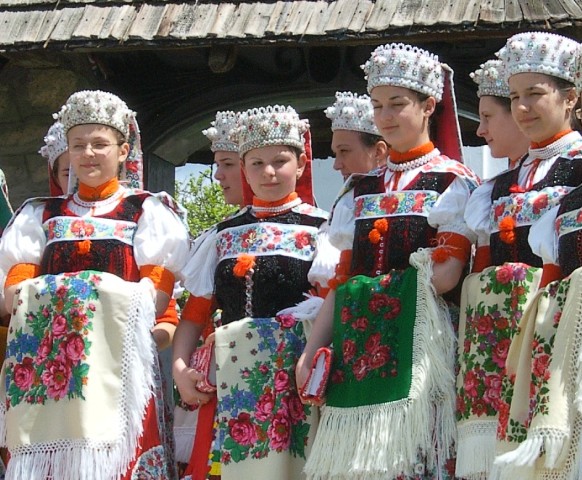
However, the differences between a Romanian and Hungarian from Romania are sometimes emphasized by politics and corrupt mass media, the reality is, that Romanians born in Transylvania are good friends of Hungarians. We share a thousand years long common history, similar melodies and vestments in traditional folklore, similar fairly tales, lot of words changed and exchanged in our language and numerous mixed families exist. 

I wish, that not only Romanian politicians, but the average tourist who visit Transylvania, this amazing part of Europe will understand, how the hell is possible, that you are in Romania, and you can hear sometimes the same language, as in Budapest.